Laboratory Equipment: The Tools for Working in the Lab
Introduction
Scientists use specialized equipment to take measurements and complete experiments. Since the laboratory component of this course is completed online, you need to order some basic laboratory equipment to conduct these experiments. You must purchase these specific items. The experiments we will be conducting in this lab have been tested using this equipment. If you purchase other equipment, it may negatively impact your data and cost you points on assignments. If you are a PSEO student taking this course during the fall or spring semesters, you can obtain these basic supplies for free from the bookstore.
This document provides information on the items you will use to complete the experiments performed in this course. Many of them you may already have in your home. Chemicals and other items specific to each laboratory will be listed in the experimental. Always take time ahead of completing the experiment each week to review the experimental procedure and gather your laboratory materials to ensure you have everything you need. It is your responsibility to collect all of the necessary materials and chemicals to complete the lab each week. Be sure to clean ALL equipment thoroughly after each use. I recommend keeping the items used in the laboratory separate from the items in your kitchen until this course is complete.
General Laboratory Equipment
Below is a list of the primary laboratory tools we will use to complete the experiments in this course. You need to be able to identify this equipment and know its proper use to safely and correctly complete the experiments in this course.
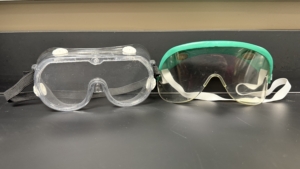
Safety Goggles
Safety goggles protect your eyes from chemical splashes and airborne debris that may be generated during laboratory procedures. Safety goggles must be worn at ALL times while conducting the experiments in this class. They should fully cover your eyes and fit snugly on your face without causing a headache.
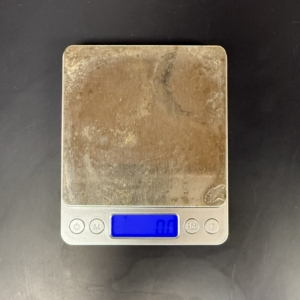
Digital Balance
A digital balance is used to measure mass. The digital balance you will use in this course measures to the 0.1gram (g). Be sure to record all of the digits on the display, even if they are zeros. All of your masses should be recorded to 0.1g (one digit past the decimal point). Ensure your digital balance is set to grams before taking any measurement.
A digital balance is NOT a scale. Scales measure weight, balances measure mass. We do not measure weight in this course.
Please note: The digital balance you will use in this class may not look exactly like the one pictured here.
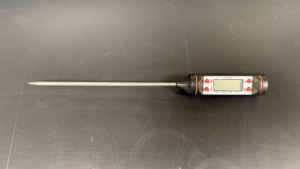
Digital Thermometer
A digital thermometer is used to measure temperature. All temperature measurements should be taken in Celcius (°C). Be sure to record all of the digits on the thermometer, even if it is a zero. Every temperature measured in the lab should be recorded to the 0.1°C (i.e., one digit past the decimal).
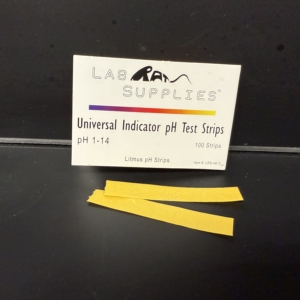
pH Paper
pH paper measures how basic or acidic a solution is. The paper turns color depending on the pH and then is matched to a key on the side of the pack to determine the exact pH.
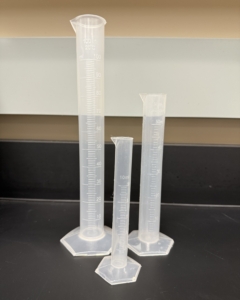
Graduated Cylinder
Graduated cylinders very accurately measure volume. We will generally use the 10 milliliter (mL) and 100mL gradated cylinders in this class. If you are measuring 10mL or less, it is recommended that you use the 10mL graduated cylinder. If you are measuring more than 10 mL, use the 100mL graduated cylinder. When measuring with a graduated cylinder, always measure to the 0.1mL (one place past the decimal). The last digit you record is an estimated value.
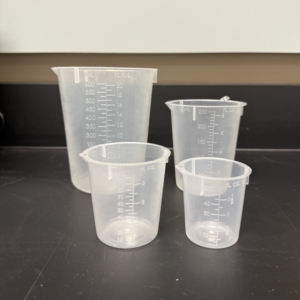
Beakers
Beakers are containers that are used to make solutions or perform reactions. They can also be used to measure estimated volumes of liquids. They come in a variety of volumes. They should not be used to measure exact volumes of liquids.
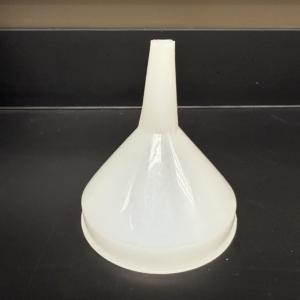
Funnel
Funnels are used to safely deliver liquids and solids into a container with a small opening.
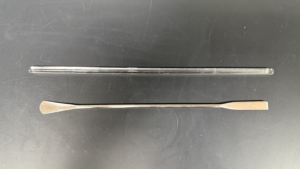
Glass Rod
A glass rod is used to stir solutions and reactions. It can also be used to spot solutions on pH paper.
Spatula
A spatula acts like a spoon for scooping solid chemicals and transferring them to a different container.
Other Items
There are other items you will also need for this course; however, you likely have most of these items in your home, or you can easily purchase them from your local big-box store.
- Oven Mitts -used for handling hot items.
- Paper Cupcake Liners – used as weigh boats for holding solid chemicals to measure their mass (Figure 1). These are single-use items and should be disposed of after they have been used. DO NOT use any of the cupcake liners you purchase for use in the laboratory for food preparation/consumption after this course is complete. Never put a chemical directly on the digital balance. Always place it in a weigh boat (for solids) or beaker/graduated cylinder (for liquids).
- Distilled or Deionized Water (DI Water) – When water is required for an experiment, distilled or deionized water should be used. Gallons of distilled (or deionized) water can be purchased at most grocery stores and cost about $1-$2/gallon. This water has had all of the ions naturally present in water removed. DO NOT use tap water during the experiments conducted in this course unless expressly stated, as it may negatively affect your experimental data.
- Plastic Garbage Bags – these will be used to cover your work surface to limit chemical contact with your home.
- Nitrile Gloves – These can be purchased at any pharmacy or big box store. Wear these while conducting all experiments to prevent skin contact with the chemicals used in this course.
- Balloons – these will be used in the Law of Conservation of Matter experiment to create a closed vessel.
- Sharpe Marker – used for labeling and a sample in the Paper Chromatography lab.
- Metric Ruler – used for measuring distance. Be sure the ruler has centimeters (cm) on one side. We do not measure in inches or feet in this course.
- Masking Tape or painters’ tape – holding the garbage bag in place on the countertop.
- Paper Towels – keep these handy to clean up any spills that may occur. Place all used paper towels into a trash can lined with a garbage bag immediately after cleaning up the spill.
- White conical coffee filters – we will use these as chromatography paper.
- WASHABLE Crayola markers – These markers MUST be washable or the lab will not work correctly, and you will miss points on it. We will use these for our samples in the Paper Chromatography lab.
Laboratory Chemicals
Below is a list of chemicals you will need over the course of the semester. Most of these you likely already have in your home. You can either buy these now or wait until the experiment calls for them. I think this is a complete list, but ALWAYS take time ahead of completing the experiment this week to gather your laboratory materials to ensure you have everything you need. It is your responsibility to collect all of the necessary materials and chemicals to complete the lab each week.
- Aluminum foil
- Cinnamon
- Cumin
- Baking soda
- Vinegar
- Sugar
- Sodium chloride (table salt)
- Cream of Tartar
- Laundry detergent
- Cooking oil (such as canola or vegetable oil)
- 91% isopropyl alcohol
- 2 empty and clean soda/water bottles (16-20oz)
- 4 packages of Pop Rocks® of the same flavor (available from Sweet Reads in Austin, Walmart online, or Amazon).
- Various household cleaners (Make sure you have window cleaner and at least 1 cleaner for the bathroom.)
- Orange, lemon, or lime juice
- Alka Seltzer® tablets (DO NOT BUY the cold/flu version)
- Milk (dairy or non-dairy is fine)
- Coffee
- Shampoo
- Soap (hand, bar, or body gel is fine)
- A clear soda such as 7-Up or Sprite
Please contact your instructor if you have any questions about these items, laboratory safety, or the experiments that will be conducted in this course.
This page was created on February 25, 2026, and was last updated on April 2, 2026.
Laboratory Equipment: The Tools for Working in the Lab ©2026 by Catherine Haslag is licensed under CC BY-NC-SA 4.0. To view a copy of this license, visit https://creativecommons.org/licenses/by-nc-sa/4.0/