
Laboratory Expectations
A college science class is different from other courses you will take because it includes a laboratory component that adds a hands-on application of lecture concepts and experimental techniques. A science class with a laboratory component is like having two classes in one. There are materials and assignments for the lecture and lab. Lecture assignments include reading the textbook, worksheets, exams, and presentations. Lab assignments include pre-lab and post-lab assignments, reading the lab manual, watching pre-lab lecture videos, completing experiments, and writing lab reports. The semester schedule outlines all of the assignments for both the lecture and laboratory components of this course.
Please NOTE: These expectations are designed for classes where the lab meets face-to-face. For expectations for an online chemistry lab, please see my post titled Expectations for an Online Chemistry Laboratory.
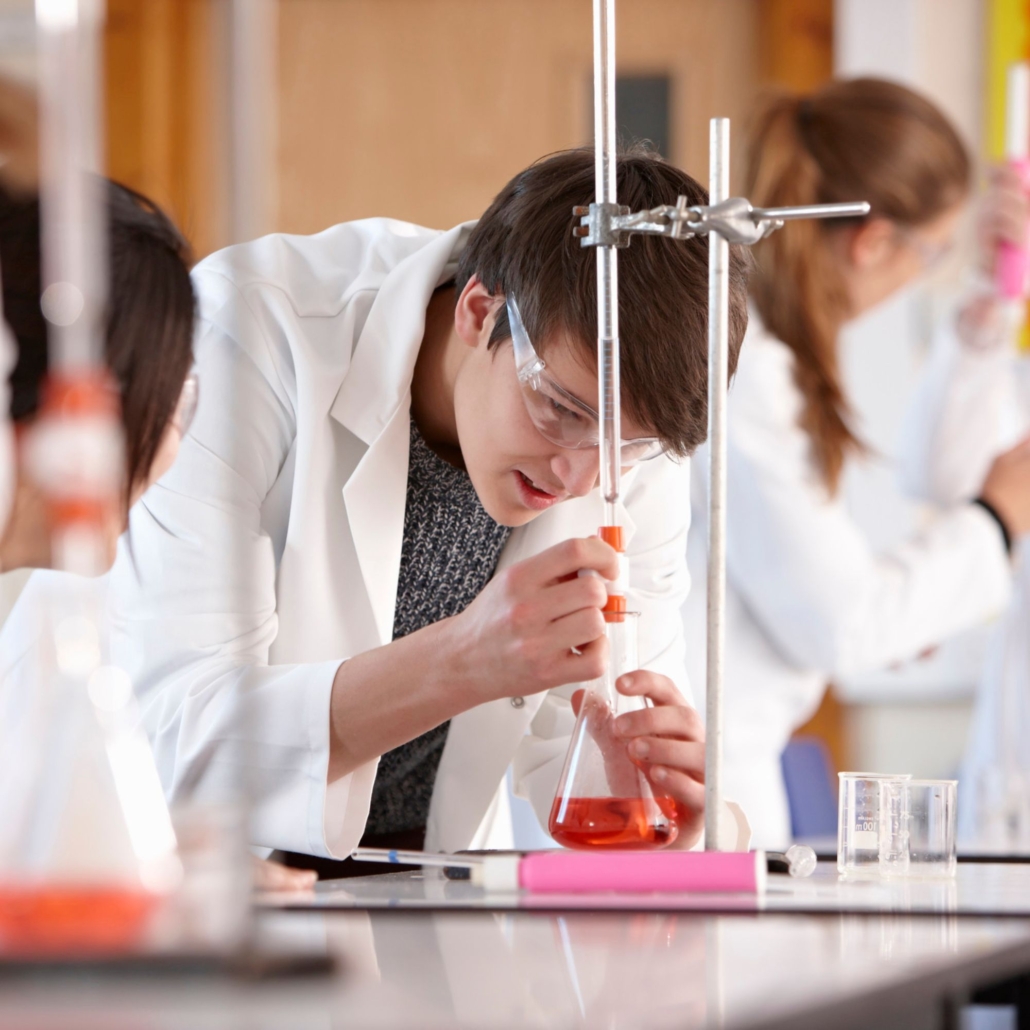
Preparing for Lab
Print a copy of the experiment.
You must bring a physical copy of the complete lab experiment (including all data tables) to the lab. I don’t allow students to work from their phones or laptops during lab time. This prevents electronics from being damaged should an accident occur. You can print your experimental procedures for free in any Riverland computer lab. You cannot complete the lab without a printed copy of the experimental procedure and all data tables.
NOTE: If you are taking General Chemistry II (CHEM 1202), you must handwrite your introduction and experimental procedure in your lab manual before the beginning of lab. You cannot complete the experiment unless your lab notebook is properly prepared.
Read the entire lab, including the experimental procedure.
Reading the entire lab will prepare you for what we are doing each week in lab. It will make it easier for you to complete the experiment and will improve your understanding if you come to class with a basic knowledge of what we will be doing. This will also help prevent possible lab accidents because you will already be familiar with the lab experiment and any safety issues.
Check the semester schedule to see which lab we will be completing this week. DO NOT assume the labs appear on Brightspace or in the lab manual in the order we will be doing them.
View the prelab videos/complete the readings posted for the lab (if applicable).
There may be reading/videos posted on Brightspace or linked in the introduction to the lab that you need to complete before the lab. This may include a prelab lecture video that outlines any special safety issues, provides background information on any specific lab technique we will be conducting, demonstrates example calculations for the week’s experiment, and explains the post-lab assignment. These videos are designed to help you better prepare for the lab. Readings may include a scientific article that applies to the concept we are studying in the lab.
It is important to allow 1-2 hours each week for reading the experiment and viewing any videos or other assigned materials before the lab begins.
Complete the pre-lab assignment (if applicable).
Sometimes you will have a prelab assignment to complete before coming to the lab. If you have a prelab assignment, it will appear just after the Introduction section of the lab. Prelab assignments are always due at the start of lab. You cannot complete the experiment if you haven’t completed the pre-lab assignment. Allow approximately 30-60 minutes to complete prelab assignments.
Ask your instructor questions.
I am a resource to help you in this class. Please let me know if you have any questions about the experiment, the prelab video, or the assignment. I recommend you contact me before the start of the lab and not as you walk in the door for the lab. I will be preparing for class at that point and won’t likely be able to dedicate time to answering your questions then. I have office hours just before the lab starts. Feel free to drop in and ask me then. I am happy to help you.
During the Lab
Work with your partner to complete the experiment.
You will be paired with another student to complete the labs. You are there to support each other and help you complete the experiments together. You will not be asked to work alone on an experiment, even if your partner is absent for the day. You will be paired with someone else in the lab to complete the experiment.
Record all of your data neatly and completely in the data table provided with the experimental procedure.
Each experiment will have a data table designed to help you record and organize your data. Be sure to include units and write neatly. Your data (qualitative and quantitative) will help you complete the post-lab assignments and write lab reports. The better your data, the easier this work will be for you to complete.
Work safely
Carefully follow the safety rules outlined in the laboratory safety information and any special notes in the introduction of the experiment.
Ask your instructor questions.
If you have any doubts during the lab, don’t be afraid to ask questions. You don’t need to know everything when you walk into the lab. You are here to learn, and I will do whatever I can to help you do this.
Complete the post-lab assignment.
This will be explained by your instructor in the prelab lecture video and/or in the assignment section at the end of the experiment. Most post-lab assignments are due by the end of the lab period, but some may be due before the following lab period. Your instructor will always let you know when the post-lab assignment is due.
After the Lab is Complete
Ask your instructor questions.
I have repeated this three times now. I am serious about students asking questions. It’s how we learn. I am here to answer your questions.
This page was published on February 9, 2026 and last updated on June 25, 2026.
Laboratory Expectations ©2026 by Catherine Haslag is licensed under CC BY-NC-SA 4.0.
 © 2026 Catherine Haslag, All Rights Reserved
 Image created using Canva