
Writing Chemical Reactions
Objectives
- Determine if a process is exothermic or endothermic.
- Write chemical formulas from chemical names.
- Write and interpret balanced chemical reactions.
- Identify types of chemical reactions.
- Predict the products of a chemical reaction.
- Draw conclusions based on experimental data.
Introduction
The purpose of this lab is to provide students with an opportunity to conduct chemical reactions and then predict and write the full, balanced chemical equation for the reaction.
Writing Chemical Equations
Chemical reactions are written in a standard format so they are easy to interpret. Figure 1.0 below demonstrates the anatomy of a chemical equation.
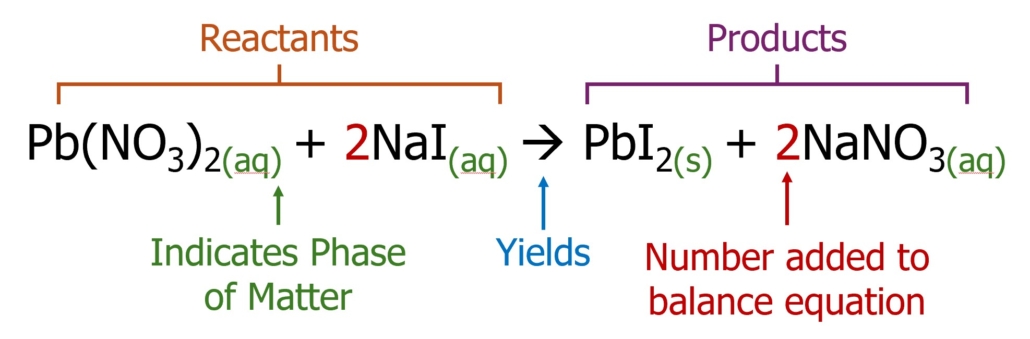
Figure 1.0 – The Anatomy of a Chemical Equation
The chemical formulas for the reactants, which are combined in the reaction, are written first (on the left side of the chemical equation). A plus sign is inserted between each formula to indicate they are combined. An arrow pointing right is written after the reactants. This arrow represents “yields” or “produces” when reading a chemical reaction. The chemical formulas for the products, which are created in the reaction, are written after the arrow (on the right side of the chemical equation). A plus sign is also used between the chemical formulas for the products.
To better illustrate what reaction occurs between ions in chemical reactions, compounds are written in the form in which they are predominantly present in water. To illustrate the phase of matter each chemical is present in, subscript letters are used after the chemical formula. (aq) means the chemical is dissolved in an aqueous solution. (s) means the chemical is a solid. If that chemical is a product, then a precipitate has formed. (g) means the chemical is a gas. (l) means liquid. This designation is typically reserved for water and organic solvents used in a reaction.
Chemical reactions are then balanced by adding whole numbers in front of the chemical formulas. Remember that nothing can be changed about the chemical formula to balance an equation. We can only change the number of moles (or molecules) of each compound present in the reaction.
Now that we know the basic organization of a chemical reaction, let’s review the major types of chemical reactions.
Classifying Types of Chemical Reactions
There are 5 basic types of chemical reactions. Being able to recognize when each of these reactions occurs aids in predicting the products that form.
Combination Reaction
These reactions occur when two substances combine to make a single new substance. Combination reactions follow the general formula:
A + B → AB
Decomposition Reaction
Decomposition reactions occur when a compound breaks into two new substances. Decomposition reactions follow the general formula:
AB → A + B
Decomposition and combination reactions are the opposite of each other.
Single-Replacement Reaction
Single-replacement reactions occur when an element reacts with a compound. One of the elements within the compound is replaced by the element it is reacting with. Single replacement reactions follow the general formula:
A + BC → B + AC
Double-Replacement Reaction
Double-Replacement Reactions (aka the Do-si-do Reaction) involve the reaction of two compounds. The cations in each compound exchange anion partners, forming two new compounds. Double-replacement reactions follow the following formula:
AB + CD → AD + CB
Combustion
Combustion reactions occur when a compound reacts with oxygen gas to produce heat energy. Typically, hydrocarbons (compounds made only of carbon and hydrogen) are involved in these reactions; however, combustion can also occur with other compounds. The complete combustion of hydrocarbons always produces carbon dioxide and water. Below is the basic formula for a hydrocarbon reaction:
Hydrocarbon + O₂ → CO₂ + H₂O
Below is a generic reaction of a combustion reaction that does not involve a hydrocarbon, where A is the element reacting with oxygen.
A + O₂ → AO
Notice how the above combustion reaction also resembles a combination reaction. Simply replace the O with B, and they follow the same formula. This means that a combustion reaction may also be a combination reaction
Combination Reaction: A + B → AB
This Week’s Lab
You will organize your data for this lab into a data table. Click below for a copy of the data table you will need for this lab. This is an editable MS Word document. All of your data from this week’s experiment must be recorded into this data table, not a reproduction. It will download to your computer. If you have trouble downloading it, check to ensure blockers are disabled.
Writing Chemical Reactions Data Table
Safety Concerns
No hazardous chemicals are used in this experiment.
Acetic Acid (vinegar) is a weak acid and can cause skin irritation if prolonged contact occurs. Avoid contact with skin and eyes. See the Safety Data Sheet for more information.
You will use a lighter in this lab. Pull back long sleeves, remove any loose-hanging clothing such as long necklaces and scarves, tie back long hair, and remove all hats before using the lighter. Have a fire extinguisher easily accessible as a precautionary measure.
Experimental Procedure
Chemicals and Supplies
Digital Balance
100mL Graduated Cylinder
250mL Beaker
pH paper
Sodium Bicarbonate (baking soda)
Acetic Acid (vinegar)
Sucrose (Sugar, C₁₂H₂₂O₁₁)
Candle
Long-neck multi-purpose lighter (Figure 2.0)
Aluminum Foil
Skillet with lid
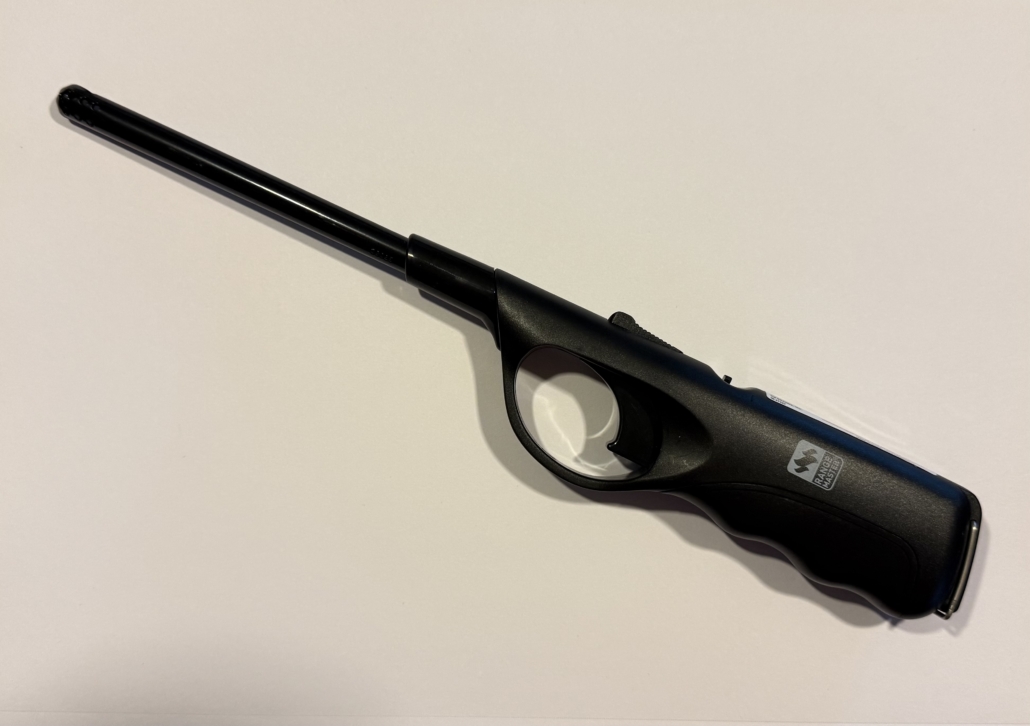
Figure 2.0 – A long-neck multipurpose lighter.
Reaction of Sodium Bicarbonate and Acetic Acid (Conducted at Home)
- Obtain 3g of sodium bicarbonate and place it in a 250mL beaker. It is ok if you measure slightly more or less than 3g of the chemical. How to use a digital balance.
- Using a 100mL graduated cylinder, measure 75mL of acetic acid. Be sure to measure to the bottom of the meniscus as described in the Physical Properties of Matter experiment.
- Determine the pH of the acetic acid. Record this information in the data table.
- Slowly pour the acetic acid into the beaker. Do not mix the solution. Record what you see happen in the data table.
- Once the reaction is complete, light the candle. This reaction produced a gas. Carefully pour the gas from the container over the candle (Yes, gas can be poured). DO NOT pour any of the liquid from the container onto the candle. Record what you see happen on your data sheet.
- Determine the new pH of the solution. Record this information in the data table.
Reaction of Sucrose in the Presence of Oxygen Gas (Conducted at Home)
- Tear a piece of aluminum approximately 6 inched long from the roll and fold it in half along the short side. Place the aluminum foil in the bottom of a skillet on top of your stove.
- Obtain approximately 1g of sugar. Carefully pour the sugar so it’s in a small pile in the middle of the aluminum foil. How to use a digital balance.
- Using the long-neck multipurpose lighter, burn the sugar for 15 seconds. If the sugar catches fire, put the lid on the skillet to snuff out the flames.
- Record what you see happen in the data table.
Reaction of Magnesium and Sulfuric Acid (Video)
Watch the video below illustrating the reaction of magnesium with sulfuric acid. Note what you observe in the data table.
Click here for a direct link to this video.
Reaction of Calcium Chloride and Sodium Carbonate (Video)
Watch the video below illustrating the reaction of calcium chloride with sodium carbonate. Note what you observe in the data table.
Click here for a direct link to this video.
Waste Disposal
- All solutions from this lab can be disposed of down the sink. Flush the sink with warm water after disposing of the chemicals.
- Place the aluminum foil with sugar in the trash once it has cooled.
- Wash any other glassware used with soap and water once the experiment is complete.
- The used pH paper can be disposed of in the trash.
Assignment
Once you have completed this experiment and recorded your data on the table provided:
- Complete the remaining sections of the data table.
- Record videos demonstrating how you write the full, balanced chemical reaction for each of these 4 reactions. In your videos, you need to:
- Show your full face at some point during the video. You can either show your face at the start, the finish, or during the entire video. State your first and last name while your face is in the video frame.
- Write the chemical formulas for the reactants. For ionic compounds, be sure to demonstrate how you determined the oxidation states and formulas for each chemical.
- Demonstrate how you identified the products and write the correct formula for each product, showing how you determined the oxidation states for the elements involved in any ionic compounds present.
- Balance the equation.
Basically, you are teaching me how to complete these chemical reactions. This is how you will demonstrate you know how to write the chemical formulas for the reactants, identify the products, write their chemical formulas, and balance the chemical reaction. I have provided an example video demonstrating all of these components.
- Submit one video for each reaction demonstrating this work. Provide a link to each video in the space provided on the data table. Double-check to ensure the links work before submitting your data table. This may involve you sending the link to another person to verify that they can access it. I have provided an example video demonstrating the requirements for each video and how to explain each reaction.
You can use any video recording software to complete this assignment; however, you need to be able to provide an accessible link to each video. All MinnState students have access to MediaSpace for recording and sharing videos. Click the link below to learn how to use MediaSpace to record and share videos.
How to use MediaSpace to record and share videos.
If you run into any issues using this resource, please let me know. I encourage you to start this work early in the week, so if you have any issues, you can get the assistance you need to meet the due date for this assignment.
References
This page was published on June 1, 2026 and last updated on June 16, 2026
Writing Chemical Reactions ©2026 by Catherine Haslag is licensed under CC BY-NC-ND 4.0