Books Read
Lead Well by Paula Davis
May was sadly the last Leadership Read book group. The group facilitator, Mary Holtorf is retiring and ending this wonderful group. I have been participating in this group since the spring of 2020. I have enjoyed the books, the learning, the conversations, and the relationships over the past 6 years. While I am excited for Mary’s retirement, I am sad to see this incredible group end.
Lead Well by Paula Davis was a wonderful note to end this group. This book dovetails very well with an idea I developed earlier in my sabbatical while reading Relationship Rich Education to create a tracker in OneNote so I can take notes and better coach students taking my classes. While this book focuses on actions management can take to create a more engaged and inspired team, it can also be used to create more engaged and inspired students.
Below is a quote from the book and an example of how the concepts discussed in this book are easily updated to apply to education.
Younger generations are looking for work environments that give them a sense of nurturing, safety, signals that leaders care about them, kindness, and the ability to see a long-term future at the organization. – Lead Well, pg 51.
While the above quote is from the book and applies to employers, it can also be re-written for the classroom:
Younger generations are looking for educational environments that give them a sense of nurturing, safety, signals that their teachers care about them, kindness, and the ability to see a path forward at the institution.
The biggest takeaway for use in my classes is the ABCs – Autonomy, Belonging, and Challenge. These all apply to the classroom as well as the workforce.
- Autonomy – Provide students with flexibility in their coursework to create meaningful learning experiences. This can include creating flexible course completion and delivery options and allowing students to choose the topic of an assignment/manner of completion where able.
- Belonging – Create an environment where students build relationships with fellow students and faculty. Provide encouragement to students and make sure they know they matter.
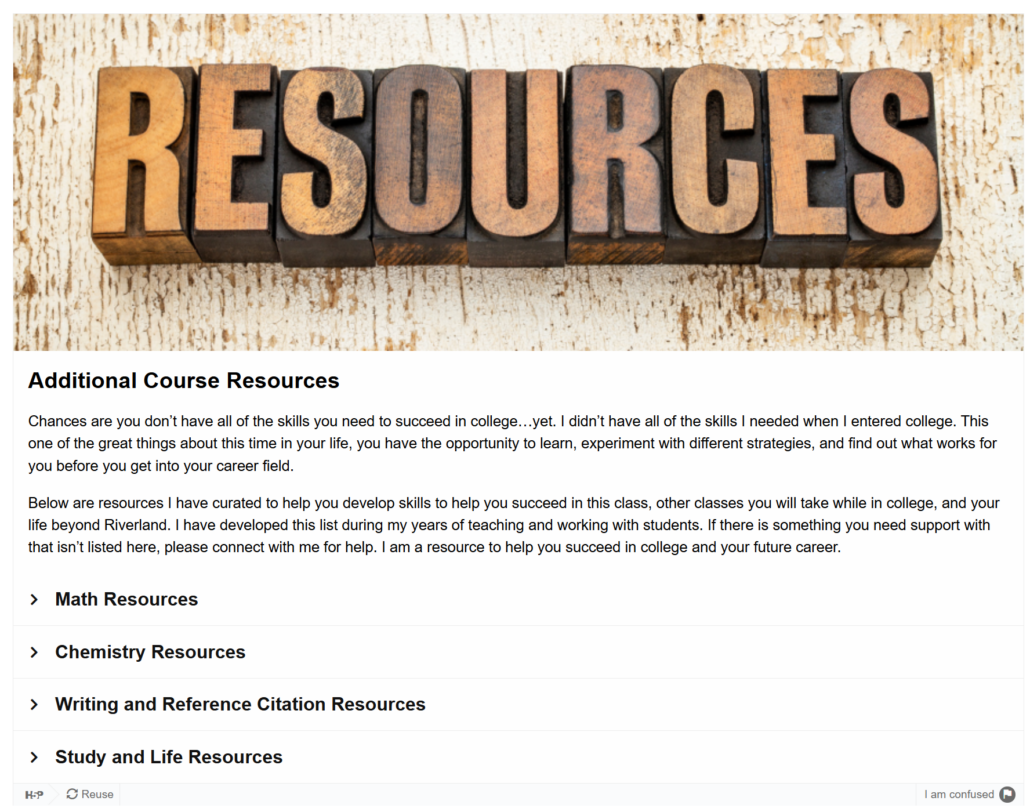
- Challenge – Growth only comes through challenge; however, the challenge also must be surmountable. Students need to be challenged and provided the support necessary to meet the challenges they will face in a course. The tricky part about a challenge is that students have to want to engage in it. Hopefully, providing some autonomy and creating belonging will encourage students to engage in course challenges. Incorporating mentoring skills to support students and additional resources I curate for my classes (see Resources work discussed above in H5P and Accessibility Work) will provide just-in-time support for students.
I plan to use this framework when adjusting and designing curriculum for my classes going forward. One way I can create more autonomy is by allowing students a choice of Goal 10 assignments they want to complete. Perhaps I could give them 2 to choose from for each unit, and they pick 1. I can also provide 8 options for the semester, and they just need to complete any 4. This allows students some autonomy with how they engage with the course material.
The Elements We Live By by Anja Royne, PhD
I chose The Elements We Live By by Anja Royne, PhD, to read during my sabbatical because I am a periodic table nerd. It is the greatest cheat sheet ever created, and I love to learn more about it. I also enjoy finding ways to tie the concepts I teach in class to real-world applications. One of those ways includes explaining how we use elements in our daily lives. This book provides stories of the everyday use of the elements on the periodic table. I plan to use what I learned in this book in the periodic table interactive lecture I will write using H5P and in my class lectures. I have already incorporated their discussion of the formation of the elements into the interactive lecture I am writing on the Periodic Table.
Teaching Students To Learn by Saundra Yancy McGuire with Stephanie McGuire
Teaching Students How to Learn by Saundra Yancy McGuire with Stephanie McGuire does a great job outlining how students can get to college without knowing how to learn, and the value in including learning skills with your general course content to help students succeed. Riverland already offers a first-year experience course that addresses some of these gaps for students; however, not every degree requires this course. Additionally, students often need to hear this information repeated throughout their classes to see how these skills apply to learning course material and meeting the associated objectives.
This book focuses on facilitating student learning, not on improving teaching skills. While it’s important that educators consistently work to become better teachers, students also need to work on their learning skills. This is a piece of the puzzle that educational institutions don’t place enough emphasis on. This book notes two common misconceptions that explain why students don’t know how to learn:
- Students didn’t need to learn in order to make As and Bs in high school.
- Students believe they are in the top half of students their age and are unaware that they can become smarter. (pg 10)
I hate to admit that I was one of the students who could earn As and Bs in high school without much effort. I was learning, but I could have done more. I learned as I completed upper-undergraduate level classes that I needed to put in more effort to maintain my grades. This is a tough time to learn that lesson. Becoming an educator has helped me realize this. I hope that maybe I can help other students avoid learning the hard way as I did.
This book also dovetails nicely with what I learned while reading Teaching Unprepared Students earlier in my sabbatical. This book also discusses the need to support students with building the study skills necessary to succeed in life; however, Teach Students How to Learn goes a step further by taking a holistic approach to student learning. It outlines how metacognition helps students become independent learners, the importance of explaining Blooms Taxonomy to students so they better understand and can meet learning objectives, and creating a learner’s mindset. I am glad I read Unprepared Students before I read Teach Students because of this relationship.
Teaching to Transgress: Educator as a Practice of Freedom by bell hooks
I chose this book because I wanted something that would challenge me and help stretch my view of education and my role as an educator. This book did just that. This is a small but dense book, one that requires one to read, re-read, and more deeply digest. I know I didn’t unpack everything during the first reading and will probably return to the fourteen essays in this book a second or third time.
I have long believed that education is one of the most powerful and valuable ventures we can invest our time, money, and energy. It’s the one thing no one can take away from you. Education is also life-changing. In my 25-years as a tutor, mentor, and educator, I have watched students grow, change, and equip themselves to be engaged and contributing citizens in our world. Hooks takes this a step further. She focuses on the systemic inequities in our society and how education is a way to learn, discuss, deconstruct, and overcome these issues.
A healthy democracy requires an educated populace, one that understands our history, science, and politics so they can form a more just and informed world. Hooks asked educators to create a curriculum that transforms them and their students. She emphasizes that the transformation must start with the educator before it can begin in the classroom with students. She also encourages the use of personal narrative, dialogue, and theory to help students learn. I have seen this idea echoed in many other books I have read on education. This process creates a personal connection between students and the course content. However, this teaching style also creates vulnerability in the classroom, which can be hard for educators and students because our educational system is generally more concerned with high grades and correct answers rather than honesty and vulnerability. I think this is part of the reason the transformation process has to start with the educator. They have to become comfortable sitting in that vulnerable environment themselves before they can help their students do the same.
Webinars
Common AI Myths—and How to Move Past Them
This webinar was offered through OneHe on May 13. Nik Janos, Professor of Sociology, and Zach Justus, Director of Faculty Development and a Professor of Communication Arts and Sciences at California State University, Chico, presented this webinar, based on an opinion piece they co-authored in April 2026.
My key takeaways from this webinar are that AI is constantly changing, and so educators need to be as well. The tips and tricks I learned 2 years ago no longer work. We may be able to catch some unsavvy AI users simply by reading their assignments, but this isn’t likely because students are becoming more skilled at using AI. Instead, we need to focus on teaching ethical and appropriate use of AI, reviewing courses to determine the appropriate offering option (i.e. some courses just shouldn’t be taught in a fully asynchronous format), determining the best types of assignments for the course, and creating AI literate students. While it is important to keep an eye out for academic dishonesty, we also can’t get consumed by thinking every student is cheating using AI. The goal here isn’t to “win” against AI; it’s about teaching students how to thrive in an AI world.
My Sabbatical Is Over. Now What?
This is a question I have already received many times from people. While my sabbatical is over, the work I started last August is not done. I am teaching an online Introduction to Chemistry course this summer. I will also spend my summer preparing for my upcoming presentations, updating course content to meet WCAG2.1 accessibility guidelines, and finalizing the sabbatical report I will submit in August, outlining how I met the outcomes I stated in my sabbatical plan.
While I am not ready to stand in front of a classroom of students yet, I will be come the first day of classes in August.